
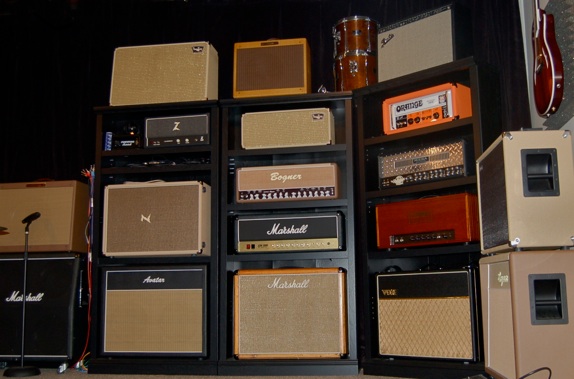
I am often asked by guitarists as to which is the best amplifier. How does one answer that question with what is to a large degree subjective? Secondly, the endless combination of power output, speakers, size, multitude of features, modelling, tube or solid state. The list goes on and so does the hype and the differing opinions. It’s a difficult question to address and answer without going insane.
So which brand is best? Well way back Led Zeppelin used Univox. Oh, but then Jimmy page uses Supro 1690T Coronado at times (amongst other brands and models), allegedly communication breakdown was recorded with this amp. The Rolling Stones used Ampeg, Hendrix – Marshall, the Vox AC30 has been known to have been used by The Edge, Eddy Van Halen often used a Marshall Super Lead 1959 100-watt Plexi. Whoever your favorite guitarist or bass player may be and the gear you think they use will likely be correct as well as wrong. People change their minds and their opinion of sound so often, that it is very likely that your favorite artist changes their amp every time they play.

Now, when you ask your friends and budding guitarists for advice you will get bombarded with here say and opinion. The story will go something like this: Dude, there is only one amp to buy and that’s the – Add Your Own Model Here – made by – Add Your Own Brand Here– all the other amps are dogs mate. But the interesting thing here is that this changes regularly and if you ask your friend the same question a couple of weeks later, you will probably get a different answer.
Most amplifier manufacturers make a broad range of models, so selecting a brand is only the start of the decision process and each guitarist’s requirements will vary greatly. A versatile and working guitarist will likely own several amps, one for small venues another for larger venues and then another amp for the acoustic to boot. However, for most guitarists if the correct amp is chosen that suits your needs and purposes, then that one amp will serve you well over time.
As you will no doubt already know, there are essentially 3 most noteworthy and most significant aspects (there are many others too which I won’t go into detail here) in the amp selection process:
- The correct size and power
- The right sound and tone
- Quality build and workmanship
An amp that is too small and low in power that you find yourself beating to death and pushing to its limits every day is not going to serve you well and will likely end up breaking down no matter how good it sounds or the quality of build. On the other hand, a poorly constructed amp your carting around from rehearsal to gigs each week that has the power and the sound you love will end up falling to bits.
When selecting a brand, it is always best to choose a well-known one, one that will stand behind its products. Today’s amps with all the digital technology and sophisticated electronics are a specialised field. Should your amp fail, you want the confidence in the brand and the company representing them that they can provide the backup and support. That they can provide service and service information, parts and all with reasonable pricing and availability.

Many brands these days, once the product is 10 or so years old cease to readily provide parts. I would suggest that most guitar amps are good for many, many more years than 10. So, brand is important. You cannot afford (or maybe you can) to buy the best, the biggest, you beaut, fully featured digital titanic of questionable dependability.
When selecting an amp within your chosen or preferred brand ask yourself these questions:
What size rooms will I be playing in?
How often and how long will I be playing at loud volumes for?
How many and what types of instruments will I be playing through the amp?
Will the amp be mic-ed up and how often?
Do I really need all the digital stuff?
Of course, there are other things to consider, which I have purposely not touched on in this blog and that is… Tube or Solid State, that argument I will leave for another blog, and probably the most significant factor is your budget and what you can afford.
