

What is Tone?
Tone can mean many different things to different people.
- Tone can refer to a constant frequency or pitch
- A tone in music is also a musical interval or a musical step in frequency.
- Tone is also often used to describe unique differences between voices of an instrument
- Tone is the colour or mood of a voice, not to be confused with timbre
This blog is about your tone as a guitarist, your ability to alter and manipulate your sound and how that works with the separation, dynamics and blending of sounds and the effect it has on the tone, sonics and quality of the band’s overall sound.
So how do you achieve YOUR guitar tone? Tubes, solid state, modelling? Let’s put that argument aside for now. None of that matters so much if your sound in the bands sonic spectrum doesn’t work, despite all the money you may have spent on your gear.
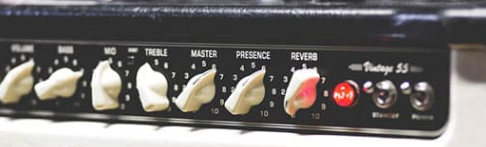
It’s not quite that straight forward though. The gear and settings you use to get great a tone in your practice room or lounge at the lower levels, will not usually work in the band situation.
But why not?
The Sonic Spectrum
It’s because in the band situation there are many other instruments, not just you. These many instruments are playing at the same time in the band and their frequencies are overlapping. It’s only going to be the distinctive parts of the sonic spectrum that will be heard.
Because there are many different roles and instruments in any given band, the frequency makeup will depend on these and what they are. For you as a guitarist, how you set up your EQ, your bass, mids and treble will a key part in determining how your sound interacts and blends with the other instruments that you’re playing alongside. It’s about how your guitar sound sits in the overall sonic spectrum and the battle for those available frequencies.
Frequency Space and Room
Dialling in your tone is all about creating a contrast and how that works together in the band and EQ has a big part to play. Bands are not just about the Bass and drums, but have other instruments that need to be taken into consideration to get the most out of any given situation. For example, AC/DC with two guitars, bass, drums and vocals has a sound that works, the guitars always sound great. Why this works is quite simple. It’s all about the guitars having plenty of space, their other instruments are secondary to them and provide the guitars plenty of room frequency-wise in the mix. There will be a lot of trial and error in creating your band’s sound, as without doubt many of the successful bands have endured too.
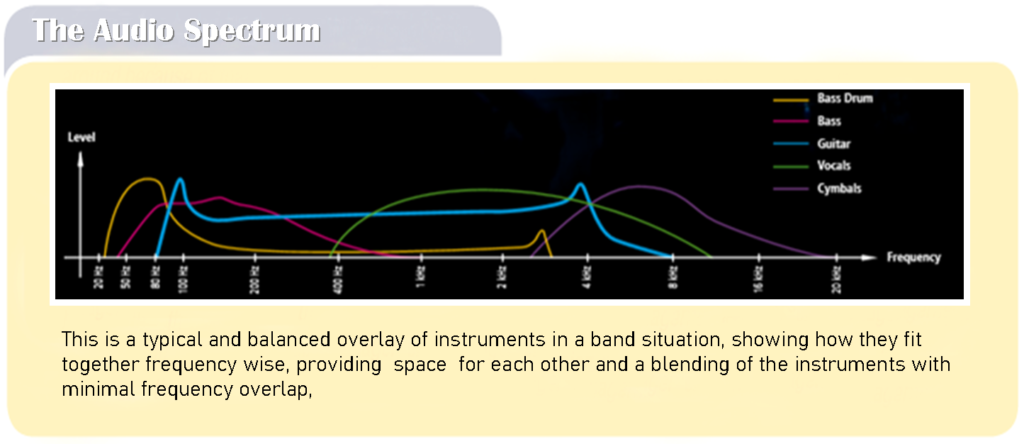
The tone and sound of your guitar you create at home, playing on your own without the other instruments of your band is just not going to work within the framework of the band. The tones you’ve dialled in that sound fat, punchy and aggressive at home will conflict and use precisely the same frequencies that the bass and drums produce and so your guitar sound just won’t stand out.
Finding the Perfect Sound Within Context
To ensure you don’t go missing in your band’s sound you need to experiment and find the tone that works. This will mean most likely using less bass, turning up the mids and reducing highs compared to what you use when playing alone at home. But given this, you still need to make sure that your settings and sound works with the other instruments in the band.
Searching for the best settings to achieve your sound will depend on the gear you are using, your effects, overdrive and distortion settings. The amps EQ settings should be used to set the fundamental character and space within the sonic spectrum.
At home chiming highs sound great, but in the band context, boosting highs with clean tones will often sound thin, because of an overlap of mids from the other instruments and the result will be hearing only the ear-piercing highs. To compensate you could turn up the mids or simply turn down the highs.

Fat punchy bass tones are great, but in the band your bass sound may be dull, rumbly or throbbing because your guitar will be using similar frequencies to the bass. Your guitar tone will sound much bigger with more bass, but beware the conflict with the bass guitar. If there is no overlap of frequencies then go for it and experiment with more bass. If there is a rumbling sound then its probably going to be around 120hz, your bass player if possible, can reduce the level around this frequency and the rumbling should disappear and bingo, you’ll have that great fat tone.
When your done getting that great sound that works in the band, you are likely going to be quite surprised when playing alone how dry your tone sounds. So, experiment with your amp settings until you find the perfect sound for any given situation, be it in the band or at home.
Mastering Your Sound
Today there is such a huge range of modern amps. Many of these amps have functionality that let you save a selection of different sounds that work in the band or home situation. You can recall these saved settings at the push of a footswitch when the situation arises. This flexibility and wealth of sounds can enrich your bands sound when the need arises, especially if you are a covers band and you can reproduce the variety of sounds required to authentically reproduce the music style.

Of course, if your musical taste and style is limited, this will be of little interest. So, in that case you will need to master and remember your settings for any given situation and manually set them accordingly.
Don’t be fooled by your sound you hear on stage, its what the audience hears out front that matters to the quality of the band’s overall sound. You may be able to hear your sound loud and clear on stage. But when your band starts playing if you haven’t got your tone and settings right, your guitar will disappear from the front of house sound. Especially and often the case when you switch between overdrive and clean channels and this is because the frequency spectrum varies so much.
For example, whilst your clean sound works well, when you switch to the overdrive channel, you disappear. If this is the case then it means lots of the mids are missing. If your overdrive is sounding full and fat, but clean tones are thin, then that means you have set your high level too high and at the same time you have too few mids.
Don’t be fooled by that amazing tone when you are playing unaccompanied, it will probably lack substance and sound thin once your band kicks in.
A little about Stomp Boxes
Stomp boxes and overdrive pedals are popular editions to the guitarists rig and today have never been more popular. One of the main reasons for this popularity is that they in fact work.
What I mean by this is that if you run a pedal through your clean or slightly overdriven amp then the frequency settings you have set on your amp will in the main remain noticeably intact and audible. The reason why this works is because there is no need to change any tone settings on the amp. Any sound changes from the pedal will simply stay within a range that is acceptable without making any frequency spectrum changes on the amp.


For all your repairs and servicing needs on the technologies of today.